
Graphite is made primarily of carbon. It is a naturally occurring mineral and an engineered industrial material in which carbon atoms are arranged in a layered crystal structure.
This structure gives graphite several distinctive properties: it conducts heat and electricity, withstands high temperatures, provides natural lubricity, and can be machined into precise industrial components. Because of these characteristics, Graphite Material is widely used in metallurgy, electronics, batteries, thermal processing, molds, seals, and high-temperature equipment.
Although graphite is made of carbon, not all graphite products are the same. The source, purity, particle size, density, binder system, manufacturing method, and final treatment can all affect performance.
What Is Graphite?
Graphite is one of the crystalline forms of carbon. In graphite, carbon atoms are bonded together in flat hexagonal layers. These layers can slide over one another relatively easily, which is one reason graphite feels soft and slippery.
The layered structure also helps explain graphite's electrical and thermal conductivity. Electrons can move efficiently along the carbon layers, allowing graphite to transfer electrical current and heat.
Graphite should not be confused with diamond. Both are made from carbon, but their atomic structures are different. Diamond has a rigid three-dimensional crystal structure, while graphite has a layered structure.
Is Graphite a Metal?
Graphite is not a metal. It is a form of carbon and is classified as a non-metallic material.
However, graphite has some metal-like properties, including:
- Electrical conductivity
- Thermal conductivity
- Heat resistance
- Chemical stability in many environments
- Dimensional stability at high temperatures
These properties make Graphite Material useful in applications where metals may soften, oxidize, deform, or react under high heat.
Natural Graphite vs. Synthetic Graphite
Graphite can come from natural mineral deposits or be produced through industrial processing.
Natural Graphite
Natural graphite is mined from deposits where carbon-rich material has transformed into crystalline graphite over geological time.
Natural graphite may occur in several forms, including:
- Flake graphite
- Vein graphite
- Amorphous graphite
Flake graphite is widely used in industrial applications because of its layered structure, conductivity, and lubricating characteristics.
Synthetic Graphite
Synthetic graphite is manufactured from carbon-rich raw materials, such as petroleum coke, needle coke, coal tar pitch, or other selected carbon feedstocks.
The raw material is processed, shaped, baked, and heated at very high temperatures in a graphitization process. This treatment converts the carbon structure into graphite-like crystalline material.
Synthetic graphite is often selected when applications require controlled purity, particle structure, density, strength, or electrical performance.
How Is Synthetic Graphite Material Made?
The production of synthetic graphite usually involves several important stages.
1. Raw Material Selection
Carbon-rich materials are selected according to the final product requirement. The choice of coke, pitch, additives, and powder size can influence conductivity, density, strength, and thermal behavior.
2. Crushing and Mixing
Raw materials are crushed, screened, and mixed with a binder. The binder helps hold the carbon particles together during forming and baking.
3. Forming
The mixed material may be shaped by extrusion, molding, isostatic pressing, vibration molding, or other forming methods.
The forming method affects grain orientation, density distribution, machinability, and mechanical properties.
4. Baking
The shaped carbon body is baked in a controlled environment. During baking, the binder is converted into a carbon structure that bonds the particles together.
5. Impregnation and Re-Baking
For higher-density products, the baked material may be impregnated with pitch or resin and baked again. This process can reduce porosity and improve density, strength, and performance.
6. Graphitization
The material is heated to extremely high temperatures to transform the carbon structure into graphite. This is the key stage that gives synthetic graphite many of its characteristic properties.
7. Machining and Purification
The finished graphite may be machined into electrodes, molds, crucibles, plates, blocks, rods, sealing components, or custom parts. Some grades may also receive purification treatment when very low impurity content is required.
What Is Graphite Material Used For?
Graphite Material is used in many industrial sectors because it can perform under high temperatures and demanding operating conditions.
Common applications include:
- Graphite electrodes for electric arc furnaces
- Crucibles and refractory components
- Continuous casting molds
- Semiconductor and photovoltaic equipment
- EDM electrodes
- Battery anode materials
- Heat exchangers
- Mechanical seals
- Bearings and dry-lubrication components
- High-temperature furnace parts
- Thermal insulation systems
- Chemical-processing equipment
- Nuclear and aerospace applications
The appropriate graphite grade depends on the application environment, temperature, chemical exposure, electrical requirements, and mechanical load.
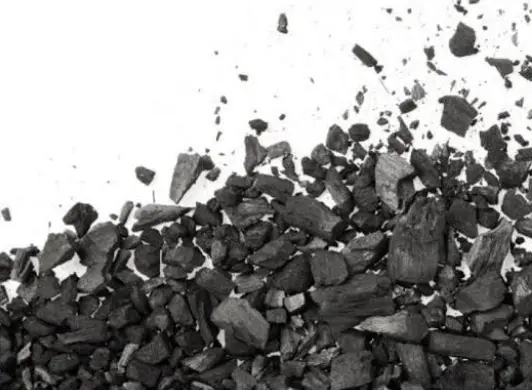
Key Properties of Graphite
High-Temperature Resistance
Graphite can maintain useful performance at very high temperatures in suitable non-oxidizing environments. This makes it valuable for furnace parts, crucibles, thermal processing equipment, and molten-metal applications.
Electrical Conductivity
Graphite conducts electricity and is commonly used in electrodes, electrical contacts, and energy-related applications.
Thermal Conductivity
Many graphite grades transfer heat efficiently. This property is useful in thermal management, molds, heat-treatment equipment, and high-temperature processing.
Natural Lubricity
The layered structure of graphite allows the layers to slide over each other. This gives graphite low-friction behavior in some dry-running applications.
Chemical Resistance
Graphite can resist many chemicals, but its compatibility depends on the specific chemical, temperature, pressure, and grade. Material selection should always consider the full operating environment.
Machinability
Compared with many high-temperature materials, graphite can be machined into precise shapes. However, machining creates fine dust, so suitable dust collection and workplace safety measures are important.
What Affects Graphite Quality?
Not every graphite product has the same performance. Important quality factors include:
- Carbon purity
- Particle size
- Grain structure
- Density
- Porosity
- Flexural strength
- Compressive strength
- Electrical resistivity
- Thermal conductivity
- Ash content
- Oxidation resistance
- Manufacturing method
For example, fine-grain graphite may be preferred for precise EDM electrodes, while large-grain graphite may be suitable for larger industrial components. Isostatic graphite can provide uniform properties for demanding applications.
Final Thoughts
Graphite is made primarily of carbon arranged in a layered crystal structure. It can be sourced naturally from mineral deposits or manufactured through high-temperature graphitization of carbon-rich raw materials.
Because of its conductivity, heat resistance, lubricity, machinability, and chemical stability, Graphite Material plays an important role in modern industry. Selecting the right graphite grade requires careful consideration of purity, density, grain size, operating temperature, and application requirements.
For Graphite Material product and application information, visit ZGTDTS.
Post time: 07-29-2026