
Graphite is a good electrode material because it combines electrical conductivity, high-temperature stability, thermal-shock resistance, and practical machinability. These properties allow graphite electrodes to carry high current into electric furnaces while operating in extremely demanding thermal environments.
However, graphite is not a one-size-fits-all solution. The right electrode grade must match the furnace design, transformer capacity, operating current, melting cycle, raw-material conditions, and consumption target. For many steelmaking and industrial furnace applications, a Normal Power Graphite Electrode can provide a reliable balance between performance and operating cost when used within its intended current range.
Why Is Graphite Used for Electrodes?
An electrode must conduct electrical energy efficiently while resisting intense heat, mechanical loading, oxidation, and thermal cycling. Graphite is widely used because it performs well across these requirements.
When electrical current passes through a graphite electrode in an electric arc furnace, the electrode helps generate an arc between the electrode tip and the charge material. The arc produces the heat required for melting, refining, or processing the material.
Graphite is especially valuable because it can maintain structural performance at temperatures that would damage or melt many metallic materials.
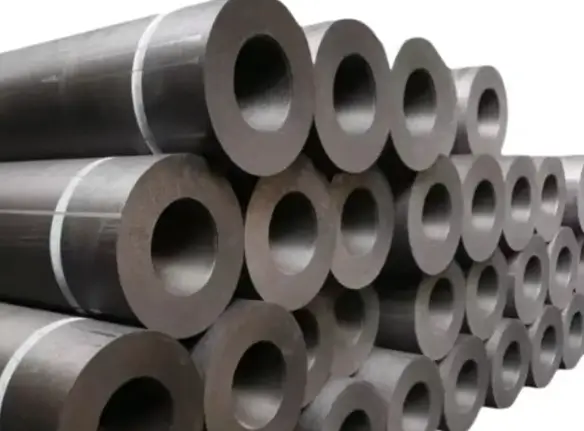
Key Properties That Make Graphite a Good Electrode
1. Good Electrical Conductivity
Graphite has a structure that allows electrons to move relatively easily through the material. This gives it useful electrical conductivity for industrial electrode applications.
Reliable conductivity helps reduce unnecessary electrical resistance and supports stable energy transfer into the furnace. In practical use, consistent current flow can contribute to more stable furnace operation and improved process control.
The electrode grade, diameter, connection quality, and operating current must all be considered together. Using an undersized or unsuitable electrode can increase resistance, overheating risk, breakage risk, and electrode consumption.
2. Excellent High-Temperature Resistance
Graphite can withstand extremely high temperatures in low-oxygen or controlled furnace environments. Instead of melting in the same way as many metals, graphite remains structurally useful at very high operating temperatures.
This property makes graphite suitable for electric arc furnaces, ladle furnaces, submerged arc furnaces, mineral processing furnaces, and other high-temperature industrial systems.
Temperature resistance does not mean graphite is unaffected by the furnace environment. Oxygen exposure, high surface temperatures, unstable arcs, poor cooling, and incorrect operating practices can accelerate oxidation and electrode loss.
3. Strong Thermal-Shock Resistance
Industrial furnaces often experience rapid temperature changes. An electrode may move from ambient conditions into a high-temperature operating zone, then face cooling, reheating, vibration, and mechanical adjustment.
Graphite generally has good thermal-shock resistance because it can tolerate rapid temperature changes better than many brittle materials. This helps reduce the likelihood of cracking caused by sudden heating or cooling.
Good thermal-shock performance is particularly important during charging, furnace startup, arc fluctuations, and operational interruptions.
4. Low Thermal Expansion
Graphite has a relatively low coefficient of thermal expansion compared with many conductive materials. This means its dimensions change less when furnace temperatures rise and fall.
Low thermal expansion helps support dimensional stability and can reduce stress at the electrode body, threaded connection, and nipple joint. It is one reason graphite electrodes can be manufactured in long sections and connected together for furnace use.
Correct handling still matters. Dropping electrodes, damaging threads, using contaminated nipples, overtightening joints, or misaligning the electrode column can create local stresses that increase the chance of breakage.
5. Practical Machinability
Graphite can be machined into electrode bodies, threaded ends, nipples, and application-specific sizes with high dimensional accuracy. This allows manufacturers to produce electrodes suited to different furnace systems and current requirements.
Machinability also supports consistent joint design. A properly manufactured and installed connection is essential because the joint must conduct high current while maintaining mechanical strength during furnace operation.
For buyers, it is important to review not only electrode diameter and length, but also nipple type, thread quality, density, resistivity, flexural strength, and the manufacturer’s dimensional-control process.
6. Chemical and Process Compatibility
Graphite is compatible with many high-temperature metallurgical and mineral-processing operations. It is widely used where a conductive material must operate in contact with hot charge materials, slag, metal, or furnace gases.
Its actual service life depends on the process atmosphere and operating method. Oxidizing conditions, aggressive slag chemistry, unstable arc practice, and improper electrode positioning can significantly affect consumption.
A good electrode selection process should consider the entire operating environment rather than evaluating graphite only by a single laboratory specification.
What Is a Normal Power Graphite Electrode?
A Normal Power Graphite Electrode is designed for furnace operations that use a normal current-density range. It is generally selected for applications where ultra-high-power performance is not required.
Normal-power grades can be suitable for certain steelmaking, alloy production, foundry, and industrial heating operations, depending on furnace conditions and customer process requirements.
Before selecting a normal-power grade, buyers should confirm:
- Furnace transformer capacity
- Required operating current
- Electrode diameter and length
- Joint and nipple system
- Furnace type and charge composition
- Melting cycle and tapping practice
- Expected electrode consumption
- Storage and handling conditions
Using a Normal Power Graphite Electrode beyond its intended electrical loading can increase side oxidation, tip loss, cracking, joint overheating, and unplanned consumption.
Graphite Electrode Performance Is More Than Conductivity
Electrical resistivity is important, but it is not the only buying criterion. A complete technical review should also include:
| Selection Factor | Why It Matters |
|---|---|
| Bulk density | Influences structural consistency and performance |
| Electrical resistivity | Affects current-carrying behavior |
| Flexural strength | Supports resistance to mechanical stress |
| Thermal expansion | Influences stability during heating cycles |
| Ash content | Can affect material purity and process suitability |
| Nipple quality | Supports current transfer and connection reliability |
| Oxidation resistance | Influences electrode consumption in service |
| Dimensional accuracy | Helps ensure stable installation and operation |
A lower purchase price does not always mean a lower operating cost. Electrode consumption, furnace downtime, breakage, power efficiency, and production consistency should all be included when evaluating lifecycle value.
How to Improve Graphite Electrode Service Life
Users can often improve electrode performance through correct operational practices.
Store Electrodes Properly
Store graphite electrodes in a clean, dry area and protect them from impact damage. Keep threaded ends and nipples clean, protected, and free from contamination.
Handle Connections Carefully
Inspect threads before installation. Use the correct lifting equipment, align the electrode column accurately, and follow the supplier’s tightening guidance for the connection system.
Control the Electrical Load
Operate within the recommended current range for the electrode grade and diameter. Excessive current density can increase heating, oxidation, and the risk of joint failure.
Maintain Stable Furnace Practice
Avoid unnecessary arc instability, repeated thermal shocks, poor electrode regulation, and conditions that expose the electrode to excessive oxygen. Stable furnace practice can help lower consumption and improve productivity.
Conclusion
Graphite is a good electrode material because it combines reliable electrical conductivity with high-temperature stability, thermal-shock resistance, low thermal expansion, and manufacturable precision. These properties make graphite essential in many electric-furnace and high-temperature industrial processes.
For buyers, the best electrode is not simply the highest-grade option. It is the grade that matches the furnace, current density, operating conditions, and production objectives. A properly selected Normal Power Graphite Electrode can deliver dependable performance and reasonable lifecycle value when applied within its designed operating range.
For technical support, product specifications, and application discussions, please contact our team.
FAQ
Why is graphite better than metal for high-temperature electrodes?
Graphite can maintain useful performance at temperatures that would soften or melt many metals. It also offers good thermal-shock resistance and useful electrical conductivity.
What is the main advantage of a Normal Power Graphite Electrode?
A Normal Power Graphite Electrode provides a practical balance of conductivity, structural performance, and cost for furnace applications operating within a normal current-density range.
Does a larger graphite electrode always perform better?
Not necessarily. Electrode diameter must match the furnace design, electrical load, connection system, and operating current. An oversized or undersized electrode can create operational problems.
What causes graphite electrode breakage?
Common causes include improper handling, damaged threads, poor joint assembly, excessive current density, unstable furnace conditions, mechanical impact, and thermal shock.
How can I reduce graphite electrode consumption?
Use the correct electrode grade and diameter, operate within the appropriate current range, maintain stable furnace conditions, protect electrodes from oxidation, and handle joints carefully.
Post time: 10-16-2026