
In modern electric arc furnace (EAF) steelmaking, few components matter more than the ultra-high power graphite electrode — and even fewer people understand the small part that makes a continuous electrode column possible: the nipple. When you see the term "UHP graphite electrode with nipple," it refers to a complete, ready-to-use unit: an ultra-high power (UHP) graphite electrode body supplied together with the precision graphite connector used to join it to the next segment.
Understanding the function of a UHP graphite electrode with nipple is essential for steelmakers, electrode buyers, and anyone involved in the supply chain. This article explains what each part does, why the nipple matters more than most people realize, and how the two work together to power a modern furnace.
What Is a UHP Graphite Electrode?
A graphite electrode is a large, cylindrical column of high-purity graphite whose job is to conduct electricity into an electric arc furnace. In an EAF, three electrodes are lowered into the furnace, and a massive electric current — often tens of thousands of amps — passes through them. At the tip of each electrode, the current leaps across a gap to the scrap steel charge, creating an electric arc with intense heat (in the range of 3,000°C and above) that melts the metal.
UHP stands for ultra high power, the highest performance grade of graphite electrode. Compared with regular power (RP) and high power (HP) grades, UHP electrodes are made from premium needle coke with extra-low electrical resistivity, allowing them to carry much higher current densities (up to roughly 40 A/cm²). This makes them the standard choice for large, high-productivity EAFs where fast melting and high throughput are the priority.
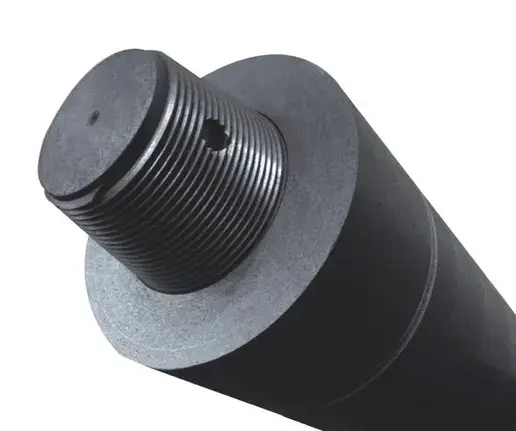
What Is the Nipple on a Graphite Electrode?
A single electrode segment is not long enough to reach the charge and keep working as the tip is consumed. To build a working electrode column, multiple segments must be joined end to end. That is exactly what the nipple is for: a specially machined, threaded connector — also made of high-quality graphite — that screws into the sockets at the ends of two electrode bodies, locking them together.
Because a UHP graphite electrode with nipple is supplied as a matched pair, the nipple and body share compatible threads and tolerances. In practice, the nipple is the critical interface between electrode segments: it carries the full electrical load across the joint and holds the column together under enormous mechanical and thermal stress.
The Core Functions of a UHP Graphite Electrode with Nipple
The function of the assembly can be broken down into four essential jobs:
1. Conducting electricity and generating the melting arc. The primary function of the UHP graphite electrode is to carry high current into the furnace and convert it into the arc heat that melts scrap steel. The nipple's job is to let that current flow from one segment to the next with minimal resistance.
2. Joining segments into a continuous column. Electrode consumption at the tip is continuous during melting. By joining new segments via the nipple, operators extend the column and keep the furnace running without stopping. This is what allows the electrode to be used continuously throughout the heat.
3. Ensuring electrical continuity across the joint. The joint between segments is the primary current-transfer interface in the column. A well-designed nipple with a tight, precise thread fit minimizes electrical resistance, reduces heating at the joint, and keeps the arc stable. A poor fit does the opposite: it creates local hot spots, higher losses, and unstable furnace performance.
4. Maintaining mechanical strength under stress. The electrode column is heavy, vibrates during operation, and is subjected to thermal expansion and bending forces. The nipple must transfer these mechanical loads reliably so the column stays straight and never separates mid-operation — a broken joint can cause arc instability, electrode breakage, and costly downtime.
Why the Nipple Is the Most Critical Part of the Assembly
Industry experience is clear: the nipple joint is frequently the weakest point of the entire electrode column. When nipple quality does not match the electrode body, the joint can fail under mechanical stress or electrical overload, leading to:
- Increased electrode consumption and higher production costs
- Arc instability and uneven melting
- Hot spots at the joint caused by high contact resistance
- Electrode breakage and unscheduled furnace downtime
Two factors matter most. First, nipple quality: the material, machining tolerance, and thread finish must be matched precisely to the electrode body. Second, make-up torque: the torque applied when screwing the nipple into the socket is just as important as the nipple itself. Proper assembly ensures the current flows seamlessly across the joint — a loose or over-tightened joint is a common cause of premature failure.
Where Are UHP Graphite Electrodes with Nipples Used?
UHP graphite electrodes with nipples are consumed primarily in:
- Electric arc furnace (EAF) steelmaking — the largest application, where they melt scrap steel for recycling.
- Ladle refining furnaces (LF) — used to heat and refine molten steel to improve quality and consistency.
- Submerged arc furnaces — for smelting ferroalloys and other metallurgical processes.
- Specialty smelting operations — such as the production of titanium dioxide and other high-temperature processes.
In every case, the function is the same: deliver a stable, high-current arc through a mechanically sound electrode column.
What to Look For When Sourcing UHP Graphite Electrodes with Nipples
Because the nipple is the weak link, buying an electrode with a properly matched nipple is not a detail — it is the specification:
- Matched quality grades. The nipple must be manufactured to the same quality level as the UHP electrode body.
- Thread type and tolerance. Confirm the thread pitch and taper meet your furnace's handling equipment and the electrode socket specification (common options include 3TPI and 4TPI designs).
- Low resistivity. Lower resistivity at the joint means fewer electrical losses and less joint heating under high current.
- Consistent dimensions and finish. Tight dimensional tolerances guarantee a perfect thread fit and reliable make-up.
- Clear make-up guidance. Work with a supplier who provides assembly instructions, torque guidance, and inspection support.
Frequently Asked Questions
What does "UHP" mean in a graphite electrode? UHP stands for ultra high power. UHP electrodes are made from premium needle coke with very low electrical resistivity, allowing them to carry the high current densities used in large, high-productivity electric arc furnaces.
Why does a graphite electrode need a nipple? Because a single electrode segment is too short to operate continuously. The nipple joins multiple segments into a long column, carrying both the electrical current and the mechanical load across each joint.
Can I use a nipple from one supplier with an electrode from another? It is not recommended. The nipple and electrode socket must be precisely matched in material, thread, and tolerance. Mismatched parts are a leading cause of joint failure and increased electrode consumption.
How often must new segments be added? The electrode tip is consumed continuously during melting. New segments with nipples are added periodically to maintain the column length, which is why the electrode is supplied as a complete unit with its nipple.
A UHP graphite electrode with nipple is far more than a piece of graphite: it is a precision-engineered assembly whose function is to deliver stable arc heat to the furnace while surviving extreme current, heat, and mechanical stress. The electrode does the melting; the nipple keeps the column whole and conducting. If you are sourcing UHP graphite electrodes with nipples and need reliable quality, matched components, and expert guidance, our team is here to help — contact us and we will be glad to assist.
Post time: 09-03-2026