
It is one of the most curious facts in high-school chemistry: carbon is a nonmetal, and generally, nonmetals do not conduct electricity well. Wood is carbon-based, but you wouldn’t use a stick to wire a house. Diamonds are pure carbon, yet they are excellent insulators. However, graphite, another form of pure carbon, breaks all the rules. It is an excellent conductor of electricity. This unique ability makes graphite the material of choice for the heavy-duty electrode industry, powering everything from steel recycling to battery manufacturing.
Why does this happen? The answer lies deep within the atomic structure of the material. It isn’t magic; it’s all about how the carbon atoms decide to hold hands. For business owners and procurement officers sourcing materials for steel mills or foundries, understanding this property is key. It explains why graphite electrodes are indispensable and why high quality matters. In this article, we will explore the fascinating world of electrons, layers, and bonds to answer the question: why is graphite a good conductor of electricity?
What Makes Graphite a Good Conductor of Electricity?
To understand why graphite can conduct electricity, we have to zoom in to the level of the atom. A single carbon atom has four electrons in its outer shell. These are called valence electrons, and they are the ones available for bonding with other atoms. In most materials, these electrons are busy holding the structure together.
In graphite, however, something special happens. Each carbon atom only forms covalent bonds with three other carbon atoms. Since carbon has four electrons available for bonding but only uses three, there is one electron left over for every single atom. This fourth electron becomes "delocalized." Instead of being stuck in one place, it is free to wander. This vast sea of free electrons is what allows the current to flow. When you apply a voltage, these electrons move like water through a pipe, making graphite a good carrier of electrical energy.
How is the Structure of Graphite Different from Diamond?
You cannot talk about graphite without mentioning its glamorous cousin, the diamond. Both are made of exactly the same thing: pure carbon. So, why is diamond an insulator while graphite is a conductor? The difference is purely in the arrange-ment of the atoms.
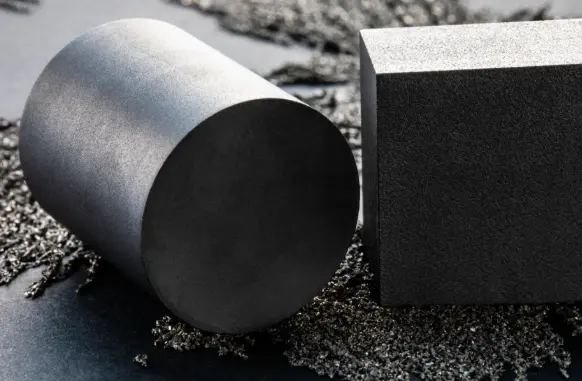
In a diamond, every single carbon atom forms a strong bond with four other carbon atoms. This creates a rigid, three-dimensional lattice where every electron is locked down tight. There are no free electrons to carry a charge. In contrast, the graphite structure is built in flat sheets. Because diamond uses all four electrons for bonding, it is electrically dead. Graphite, using only three, keeps that vital fourth electron free to conduct. This fundamental difference in structure dictates their destiny: one becomes a jewel, and the other becomes a powerhouse for electrical conduction.
What Are Free Electrons and Why Do We Need Them?
Imagine a busy city where all the cars are parked in garages. That is an insulator. Now, imagine a city with a massive highway system where cars are zipping back and forth constantly. That is a conductor. In this analogy, the cars are electrons. For a material to conduct electricity, it needs "traffic"—it needs charge carriers that can move.
In graphite, the delocalized electrons are not bound to any specific atom. They float in a cloud above and below the carbon sheets. This is often referred to as a "sea" of electrons. Because they are free to move, they can drift through the material when an electrical force is applied. This freedom is a rare property for a nonmetal. Most nonmetals hold onto their electrons greedily, but graphite shares them, allowing for the efficient transfer of energy.
How Do Layers in Graphite Help Conduct Electricity?
The structure of graphite is layered, somewhat like a deck of cards or a stack of paper. The carbon atoms arrange themselves in hexagonal rings, forming flat, two-dimensional sheets. These sheets are the "cards" in the deck.
Within each sheet or layer, the atoms are held together by super strong covalent bonds. However, the forces holding the different layers together are very weak. These are known as Van der Waals forces. This is why graphite feels slippery and is used as a lubricant—the layers slide over each other easily. But for electricity, this layered structure creates a superhighway. The delocalized electrons move freely along the plane of the layers. The resistance is low within the layer, allowing electrons to pass quickly. This is why high purity 99.9% graphite powder is so effective in conductive coatings and additives; it leverages these microscopic conductive layers.
What Role Do Covalent Bonds Play in Electrical Conduction?
Bonds are the glue of the universe, but not all bonds are created equal. In graphite, the covalent bonds between the carbon atoms within a layer are incredibly strong. This gives the material its high melting point and stability, which is essential for an electrode facing the heat of an electric arc furnace.
However, the magic number is three. Because each carbon connects to only three neighbors via single and double bonds (resonating structures), that fourth electron enters the pi system. A pi bond system allows electrons to be delocalized over the whole plane. If the atoms formed four single bonds (like in diamond), there would be no pi system, no delocalization, and no conductivity. The specific nature of these bonds allows graphite to act as a metal in terms of conduction while remaining a light, heat-resistant nonmetal.
How Does Graphite Compare to Metal Conductors?
Usually, when we think of a conductor, we think of copper, silver, or aluminum. These are metals. Metals conduct because they naturally have a "sea" of electrons. Graphite is a good conductor, but is it as good as metal?
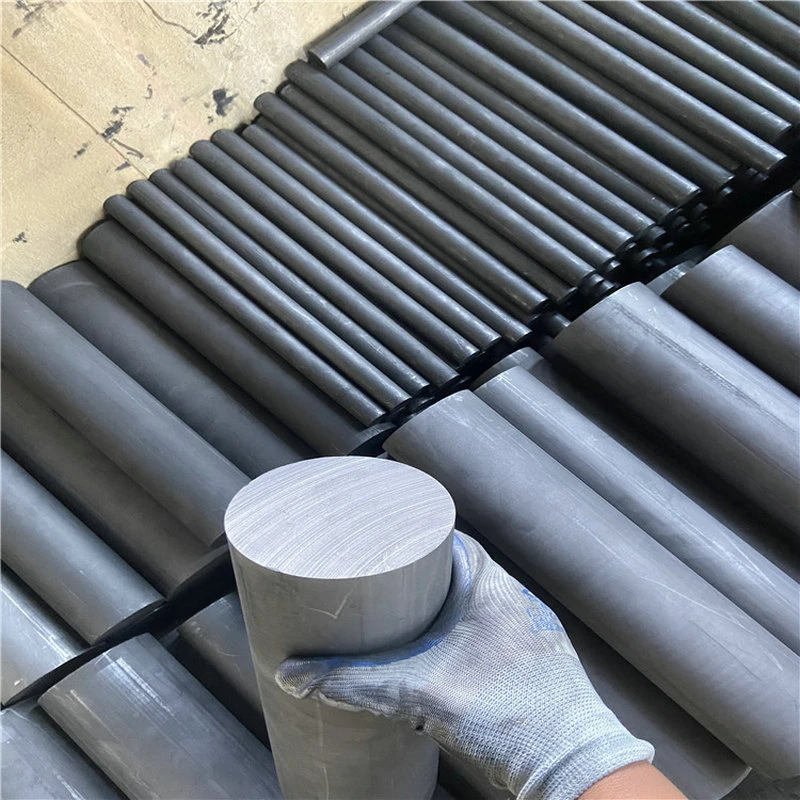
In the direction of the planes (the layers), graphite is an excellent conductor, rivaling some metals. However, perpendicular to the layers (jumping from one sheet to another), it is a semiconductor or even an insulator. This is called anisotropy. However, in manufactured products like a conductive graphite rod for electrodes, the grains are mixed and pressed to ensure good overall conductivity. The key advantage graphite has over metal is not just conductivity, but thermal survival. A copper electrode would melt instantly in a steel furnace. Graphite conducts the electricity needed to melt the steel without melting itself.
Top Industrial Applications: Where is Conductive Graphite Used?
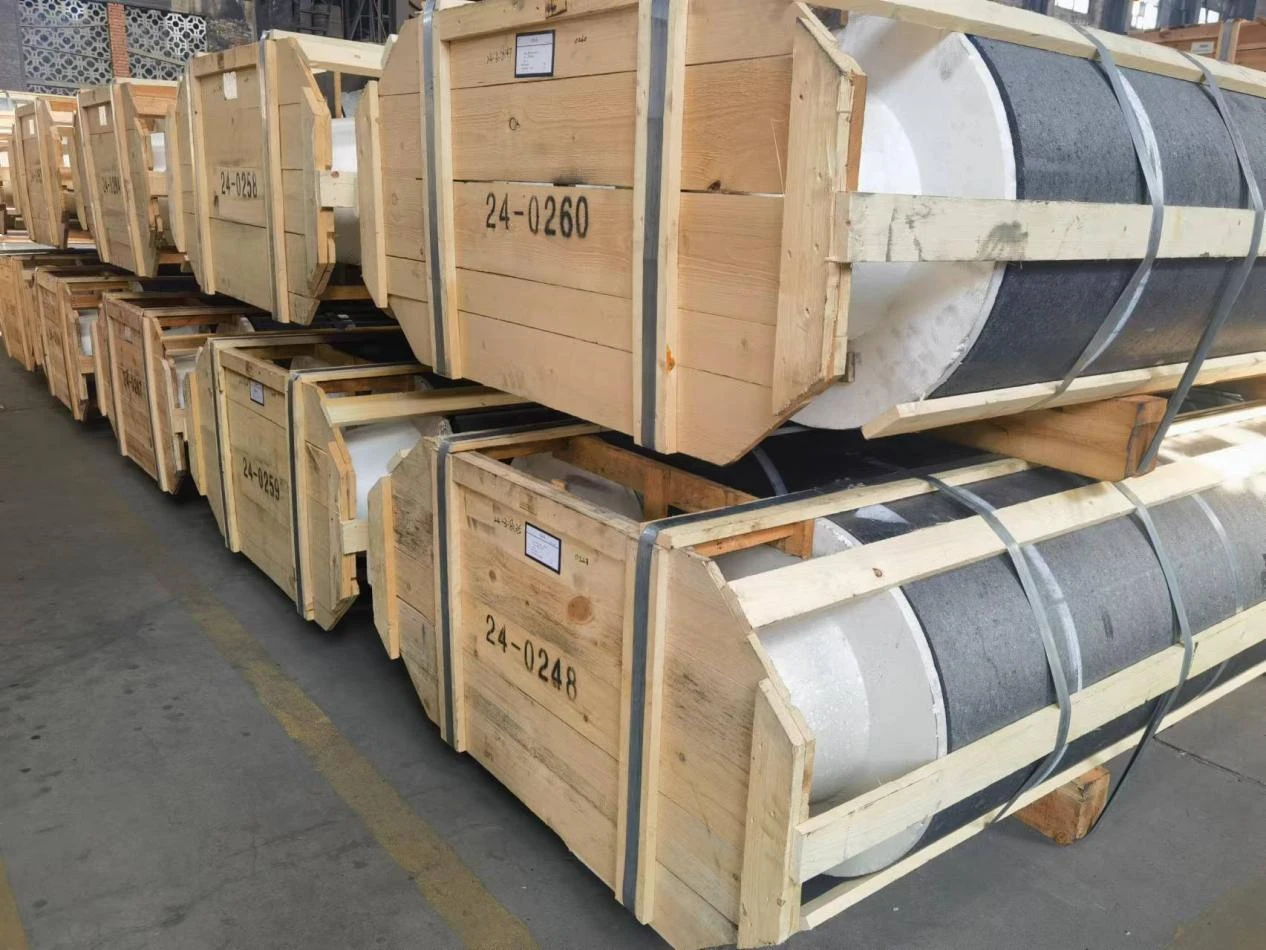
Because graphite is an excellent conductor, it has found a home in some of the most demanding industries on Earth. The most prominent application is in the manufacturing of steel. Huge high-power graphite electrodes are used to deliver massive currents into electric arc furnaces to melt scrap metal.
Beyond steel, this material is used in:
- Batteries: The anode of a lithium-ion battery is typically made of graphite.
- EDM (Electrical Discharge Machining): Graphite blocks are used to shape hardened steel molds through electrical sparks.
- Electrolysis: Used in the production of aluminum and other chemicals where a chemically inert conductor is needed.
- Brushes in Electric Motors: They conduct current to the moving parts of a motor while providing lubrication.
Why is High Purity Important for Graphite Electrodes?
If you are buying graphite, you might notice that price often correlates with purity. Why does this matter? Impurities—bits of ash, silicon, or other non-carbon elements—act like roadblocks on our electron highway. They disrupt the perfect hexagonal lattice and block the path of the free electrons.
A high purity electrode has fewer obstacles, meaning it can conduct more current with less resistance. Resistance creates heat (not the good kind), which can cause the electrode to crack or oxidize faster than it should. For critical applications, utilizing high strength graphite blocks ensures that the structural integrity matches the electrical performance. High purity means better efficiency and lower long-term costs for the user.
How Does Temperature Affect Graphite’s Ability to Conduct?
Here is where things get really interesting. In most metals, as you heat them up, they get worse at conducting electricity. The atoms vibrate more and scatter the electrons. Graphite, however, behaves differently.
As you heat graphite, it often becomes a better conductor (up to a certain point). The heat energy excites more electrons, pushing them into the conduction band where they can move freely along the planes. This property is incredibly useful in high-temperature applications like arc furnaces. While a metal wire might overheat and fail, a graphite electrode settles into its job, efficiently pumping power into the melt. This thermal stability combined with electrical capability is why graphite sits at the top of the materials list for high-heat electronics.
What Do Buyers Need to Know About Selecting Graphite?
For someone like Mark, our persona who buys these products, understanding the science helps in making better decisions. When you see a specification sheet, look at the electrical resistivity (the opposite of conductivity). You want that number to be low.
You also need to know that not all graphite is the same. There is natural flake graphite, amorphous graphite, and synthetic graphite. For high-performance electrodes, synthetic graphite is usually required because we can control the structure and purity to ensure those layers in graphite are perfectly aligned to allow maximum current flow. Whether you need a simple powder or a massive UHP electrode, the underlying physics remains the same: it’s all about the free electrons in those carbon sheets.
Key Takeaways
Graphite is a fascinating anomaly in the world of materials science. It bridges the gap between metals and nonmetals, offering the best of both worlds for heavy industry.
- Free Electrons: The primary reason graphite conducts is the presence of one free (delocalized) electron per carbon atom.
- Layered Structure: The atoms form flat, hexagonal sheets where electrons can travel easily with little resistance.
- Different from Diamond: While diamond traps all its electrons in bonds, graphite leaves some free, making one an insulator and the other a conductor.
- Industrial Power: This property allows graphite electrodes to carry massive currents without melting, essential for steel production.
- Thermal Advantage: Unlike many metals, graphite maintains or improves its conductivity at very high temperatures.
- Purity Matters: Fewer impurities mean fewer roadblocks for electrons, resulting in a more efficient and durable component.
Post time: 01-07-2026