
Understanding the density of graphite is not just a scientific exercise; it is the absolute foundation of modern industrial success. Whether you run a massive electric arc furnace or source materials for cutting-edge energy storage, the structural compactness of your carbon materials directly dictates your profitability. This article breaks down the complex world of natural graphite and artificial graphite. You will learn exactly why the density of a high-performance graphite electrode prevents costly furnace shutdowns, and how the perfect anode transforms a standard lithium-ion battery into a powerhouse. Read on to master the physical properties that separate cheap consumables from world-class metallurgical and energy solutions.
What Exactly Is the Theoretical Density of Graphite?
When materials science experts talk about the theoretical density of graphite, they refer to a perfectly flawless crystal structure. In a laboratory setting with absolutely no pores or defects, the true density of graphite is 2.26 grams per cubic centimeter (g/cm³). This number represents the absolute maximum compaction of carbon atoms arranged in their natural hexagonal lattice. Every atom sits exactly where it should, creating an incredibly tight, ordered structure.
However, finding this perfect 2.26 g/cm³ in the real world is nearly impossible. Industrial manufacturing always introduces some level of porosity. Think of a perfectly solid brick compared to a natural sponge. While the theoretical limit is a strict baseline, the actual density of graphite you encounter in a factory setting will always be lower due to microscopic voids. This gap between theory and reality is what engineers constantly work to close when designing a high-density product.
Understanding this baseline is crucial for buyers. If a supplier promises you a bulk product with a density matching the theoretical limit, they are not being truthful. Recognizing the physical limits of the material helps you set realistic expectations for your high-performance applications, whether you are buying structural blocks or fine conductive powders.
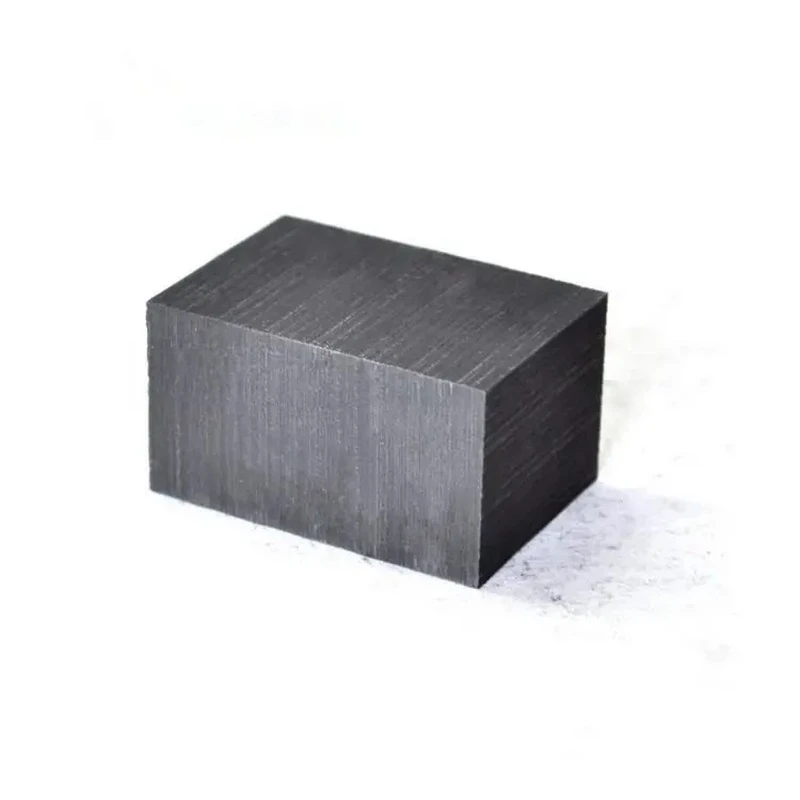
How Do You Calculate the Theoretical Density of a Carbon Material?
To calculate the theoretical density, scientists rely on atomic measurements rather than simple scales. They use x-ray diffraction (XRD) to look deep into the material. The diffraction pattern reveals the exact distance between the layers of carbon atoms. By measuring the volume of the basic unit cell in the crystal lattice and dividing it by the atomic weight of the carbon inside that cell, they find the perfect mathematical density.
If you want to calculate this yourself, you need precision instruments. The formula involves the mass of the atoms in the unit cell divided by the volume of that cell. Because graphite has a layered structure, the spacing between the layers (known as the d-spacing) heavily influences the final number. A tighter lattice means a higher density. When researchers analyze new graphite samples, this is the first calculation they run.
This measurement acts as a quality benchmark. By comparing the calculated ideal density against the actual measured overall density of a manufactured piece, engineers determine the porosity. A lower porosity percentage means the manufacturing process was successful in packing the material tightly, which is exactly what you want for a robust final product.
What Are the Main Factors Affecting Graphite Density?
Many unique elements influence the final weight and volume of these materials. The primary factors affecting graphite density begin with the raw materials. High-quality petroleum coke and coal tar pitch yield much denser final products than lower-grade alternatives. If the initial coke is full of impurities, the final structure will be weak and highly porous.
The manufacturing process itself plays a massive role. During production, the mixture undergoes intense heat treatment. As the binder pitch bakes and turns into solid carbon, it releases gases. These escaping gases create tiny bubbles or pores, which result in a lower density. To fight this, premium manufacturers use a vacuum impregnation process. They force liquid pitch into these pores under extreme pressure and bake it again, successfully driving the density up.
"Density is not an accident. It is the deliberate result of controlled raw materials, high pressure, and relentless heat."
Finally, the graphitization temperature matters. Pushing the heat beyond 3,000°C organizes amorphous carbon into a rigid, crystalline ordered structure. If the factory cuts corners and lowers the temperature, the material retains its amorphous nature and stays light and weak. Strict quality control at every heating stage is the only way to guarantee a dense, reliable product.
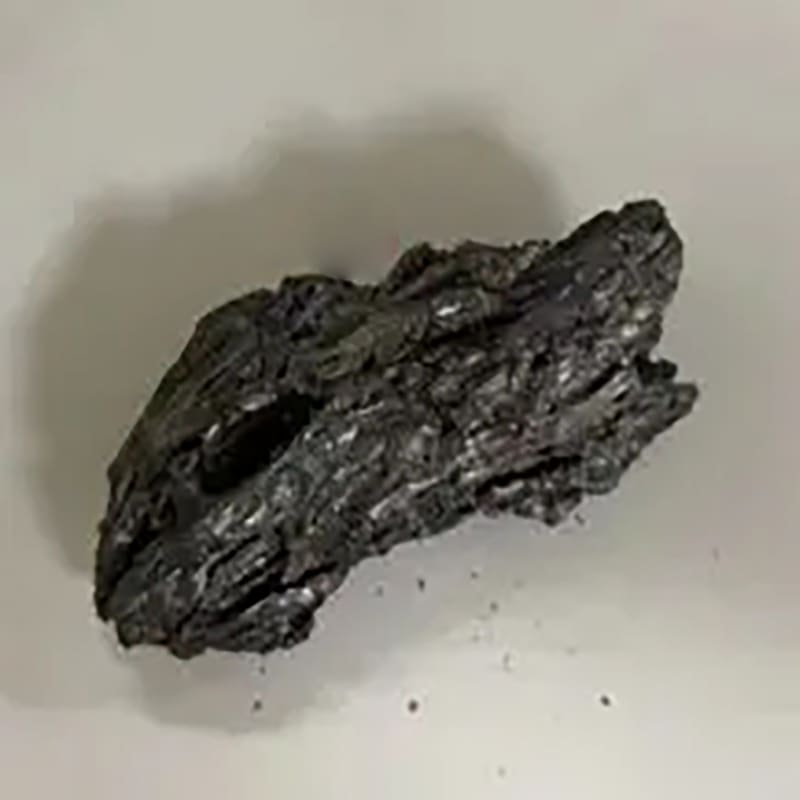
Natural Graphite vs. Artificial Graphite: Which Powder Has Better Density?
The debate between natural graphite and artificial graphite usually comes down to application and consistency. Natural flake graphite is mined directly from the earth. Because it forms under massive geological pressure over millions of years, individual flakes often have an extremely high density that approaches the theoretical limit. However, natural deposits contain varying levels of ash and impurity that require heavy chemical processing to clean.
On the other hand, synthetic or artificial graphite is born in a factory. It starts as an oil or coal byproduct and transforms through intense heating. While a single natural flake might be denser, artificial graphite allows for perfect control over the particle size distribution. You can engineer an artificial powder to pack together perfectly. This controlled packing often results in a better overall bulk density when you compress the powder into a mold.
For advanced applications, especially where high electrical conductivity is required, artificial products win out. The predictable nature of synthetic materials means you get the exact same density in every batch. This consistency is exactly why industries prefer high purity 99.9% graphite powder made artificially when precision is non-negotiable.
How Does the Density of Diamond Compare to Diamond and Graphite Structures?
It is fascinating to look at diamond and graphite together. Both consist entirely of carbon, yet they look and act completely differently. The density of diamond sits at a massive 3.51 g/cm³. This makes diamond one of the densest and hardest natural materials on earth. The carbon atoms in a diamond lock together in a rigid, three-dimensional tetrahedral lattice. This tight packing leaves virtually no empty space.
In contrast, the density of graphite is much lower because of its layered structure. The atoms form flat sheets. While the bonds within the sheet are incredibly strong, the bonds between the different sheets are quite weak. This creates small gaps between the layers. Because of these gaps, the overall volume increases, making the material significantly lighter than diamond.
This structural difference is a cornerstone of materials science. While diamond’s high density makes it perfect for cutting tools, the layered, lower density of graphite allows the sheets to slide over one another. This unique property makes it an amazing dry lubricant and an ideal material for electrical conductivity. It perfectly illustrates how atomic arrangement changes everything.
Why Is Bulk Density Crucial for Graphite Products Like Electrodes?
In the industrial world, theoretical numbers matter less than practical measurements. Bulk density is the true weight of a material divided by its total volume, including all the microscopic pores inside it. For heavy-duty graphite products, bulk density is the ultimate indicator of quality. A denser product contains more actual carbon and less empty air, making it far more capable of handling extreme industrial environments.
Let’s look at the numbers. A standard quality electrode might only achieve a bulk density of 1.55 g/cm³. If a manufacturer improves their process, a high power grade might hit 1.6 g/cm³. However, a premium ultra-high power electrode must reach 1.7 g/cm³ or higher. This higher density provides the immense mechanical strength required to withstand the violent environment of an electric arc furnace. If the bulk density is too low, the electrode acts like a fragile sponge and breaks easily.
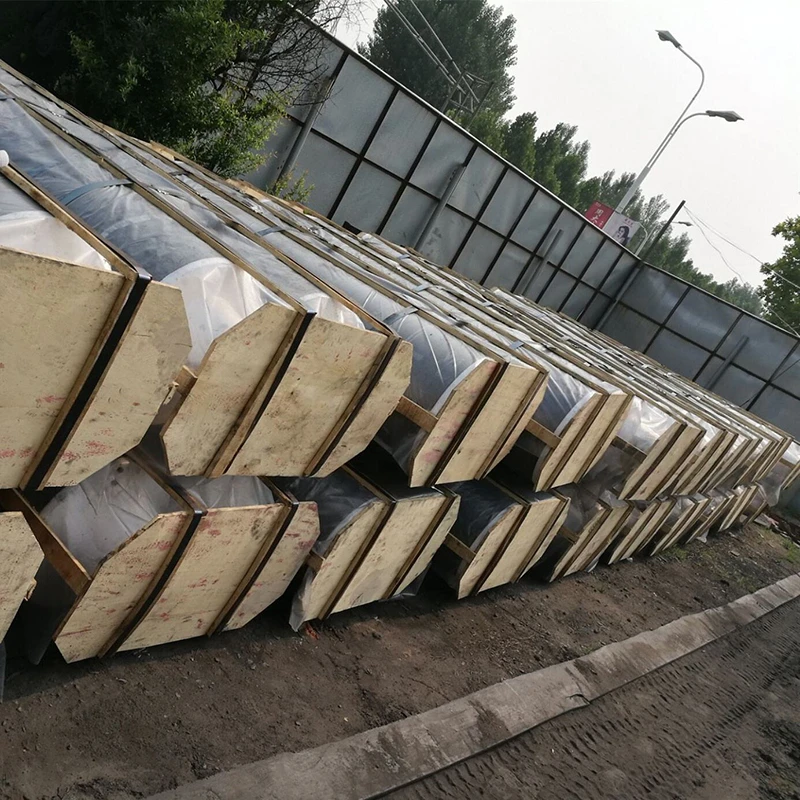
When you procure a Ultra-high power graphite electrode, you are essentially paying for density. High density ensures low electrical resistance, meaning less energy is wasted as heat. It also slows down oxidation. A dense exterior stops oxygen from penetrating deep into the rod, allowing it to survive much longer in a 3,000°C melt.
How Does the Density of Graphite Impact High-Performance Battery Anodes?
The energy storage revolution relies heavily on carbon. Inside almost every lithium-ion battery on the market, the anode is made of graphite. The density of the anode powder directly determines how much power the battery can hold. If the graphite is packed tightly, you can fit more active material into a smaller battery cell, dramatically increasing the volumetric energy density.
During the charge cycle, lithium ions travel across the battery and wedge themselves between the graphite layers—a process called intercalation. If the density of graphite is optimal, the layers accept the lithium smoothly without causing the battery to swell excessively. If the density is too low, the battery takes up too much physical space. If it is too high and lacks the necessary tiny pores, the lithium struggles to enter, which ruins the fast-charging capability.
Manufacturers carefully engineer the particle shape to balance this. They often use spherical artificial graphite. The spherical shape allows the powder particles to pack together efficiently while leaving just enough room for the electrolyte liquid to flow. This careful manipulation of density is the secret behind the long-lasting batteries in modern electric vehicles.
Can We Calculate How Density Affects Energy Storage in a Lithium-Ion Battery?
Engineers calculate energy density by measuring how many milliampere-hours (mAh) of charge a specific gram or cubic centimeter of material can hold. For a battery, volumetric capacity (how much energy fits into a specific space) is often more critical than weight. By improving the packing density of the anode powder, engineers squeeze more capacity into the exact same battery shell.
- Standard Packing: Yields an average energy density, suitable for small electronics.
- High-Density Packing: Essential for electric vehicles where space is at an absolute premium.
- Optimized Porosity: Balances density with the need for rapid lithium ion movement during a fast discharge.
When cycling performance is tested, density plays another massive role. As lithium enters and exits the anode during charge and discharge cycles, the carbon structure expands and contracts. A well-engineered, high-density artificial high performance pre baked anode carbon block or powder resists this mechanical stress. It prevents the anode from cracking over time, ensuring the battery lasts for thousands of cycles without losing its ability to hold a charge.
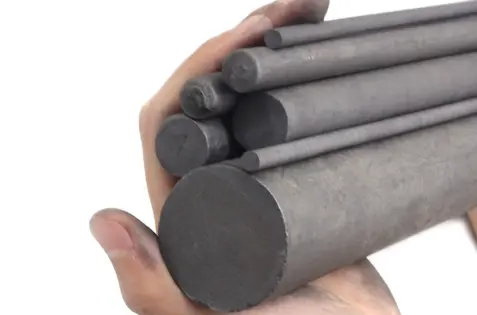
Why Is Quality Control Vital When Measuring the Density of the Electrodes?
You cannot manage what you do not measure. In a large-scale carbon manufacturing plant, the density of the electrodes is checked meticulously at multiple stages. If a batch of electrodes misses the target density by even a small margin, it indicates a severe flaw in the production process. Perhaps the raw aggregate mix was wrong, or the impregnation cycle failed to push enough pitch into the core.
Factories often use the Archimedes principle for measurement. By weighing the electrode in the air and then weighing it while submerged in a liquid, they can calculate the exact bulk density. This precision measurement is a non-negotiable step in quality control. It guarantees that the customer receives exactly what they paid for.
Without this strict quality control, a steel mill might install a weak electrode. When that low-density electrode snaps mid-production, the entire furnace must stop. The cost of that downtime far exceeds the price of the electrode itself. Therefore, consistent measurement of density is the ultimate insurance policy for both the supplier and the buyer.
How Does High Density Makes Graphite Products Better for Steel Mills?
For a steel mill manager, density equals reliability. When lowering a massive graphite column into a scrap-filled electric arc furnace, the environment is brutal. The electrodes also must carry tens of thousands of amps of electricity while physically pushing through jagged, collapsing steel scrap. A low density rod will simply crack under the pressure or burn away too quickly due to rapid oxidation.
High density makes the electrode rigid and durable. It provides the mechanical strength needed to resist the massive vibrations caused by the electric arc. Furthermore, a dense structure provides extremely high thermal conductivity. As the electrode heats up, the dense carbon structure rapidly pulls the heat away from the sensitive connecting joints, preventing them from melting or bursting.
Whether you are sourcing a simple crucible or a giant High strength graphite block for furnace lining, you must demand high density. It is the defining characteristic that ensures the material is highly conductive, physically tough, and capable of enduring the most extreme industrial conditions on the planet.
Key Takeaways for Procurement and Engineering
- Know the Baseline: The theoretical density of graphite is 2.26 g/cm³, but real-world bulk density is always lower due to manufacturing porosity.
- Bulk Density is King: For industrial EAF applications, aim for a bulk density of 1.6 to 1.7 g/cm³ to ensure adequate mechanical strength and low consumption rates.
- Artificial Over Natural: Artificial graphite offers better consistency, tunable particle sizes, and superior packing density, making it ideal for precision battery and metallurgy uses.
- Battery Performance: In a lithium-ion battery, optimizing the packing density of the anode powder drastically improves volumetric energy density and long-term cycling performance.
- Quality Control: Always partner with a supplier who utilizes rigorous density measurement techniques (like Archimedes) to guarantee product stability and prevent catastrophic furnace failures.
Post time: 04-08-2026