
In the high-stakes world of modern metallurgy, the difference between a profitable melt and a financial disaster often hangs by a thread—specifically, the threads of a graphite electrode nipple. For procurement directors and melt shop managers operating Electric Arc Furnaces (EAF), the goal is simple yet elusive: minimize the cost per ton of liquid steel while maximizing furnace uptime. You aren’t just buying a consumable; you are investing in the stability of your production line. This article explores the technical nuances of ultra-high power graphite electrodes, the critical importance of 4TPI nipples, and how sourcing directly from a reputable factory in China can balance specification requirements with a good price.
What is the Basic Info and Product Description of a Graphite Electrode?
When we look at the basic info of a graphite electrode, we are looking at more than just a pillar of black material. It is a highly sophisticated conductor designed to withstand extreme conditions that would vaporize most other substances. A graphite electrode is essentially the "fuel injector" of an electric arc furnace, delivering massive amounts of electrical energy into the scrap metal to melt it. The product description usually highlights its composition: premium needle coke and coal tar pitch, baked and graphitized at temperatures exceeding 3000°C.
The classification of these electrodes—UHP (Ultra High Power), HP (High Power), and RP (Regular Power)—dictates their current carrying capacity and physical density. For a modern, high-intensity EAF or LF (Ladle Furnace), a standard product simply won’t suffice. You need a graphite electrode capable of handling current densities up to 25-30 A/cm². If the product fails to meet these rigorous standards, the result is rapid oxidation, structural failure, and the dreaded "stub loss" that halts production.
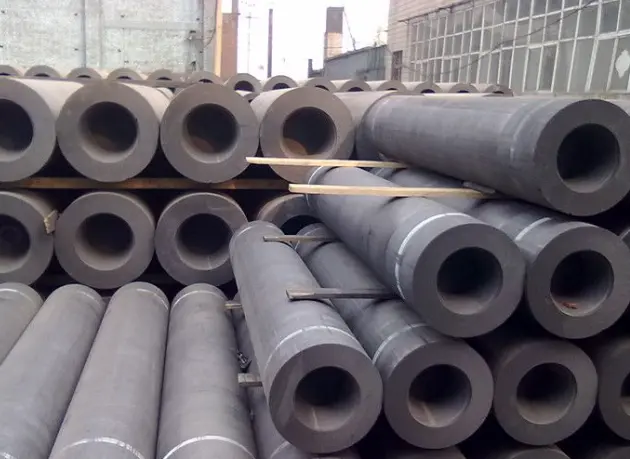
The carbon structure within the electrode must be uniform. Any inconsistency in the basic info—such as bulk density or specific electrical resistance—can lead to uneven heating. Whether you are running a 100-ton furnace or a smaller foundry setup, understanding the grade (UHP vs. HP) is the first step in optimizing your metallurgy process.
How Does the Manufacturing Process Ensure Reliable UHP Graphite Electrode Performance?
The journey of a uhp graphite electrode from raw material to a finished product ready for shipping is a testament to engineering precision. As a manufacturer and factory based in Hebei, the heart of China’s carbon industry, we understand that production quality cannot be inspected into the product; it must be built in. The process begins with the selection of premium needle coke, which gives the UHP grade its low Coefficient of Thermal Expansion (CTE). This is vital because thermal shock is the leading cause of spalling.
Once the raw materials are crushed, screened, and mixed with binder pitch, the green electrode is extruded. However, the magic happens during the baking and impregnation stages. A uhp graphite electrode undergoes high-pressure impregnation (HPI) to fill the pores created during baking. This increases the density and mechanical strength. Following this, the graphitization process realigns the carbon atoms into a crystalline graphite structure, drastically lowering the electrical resistivity.
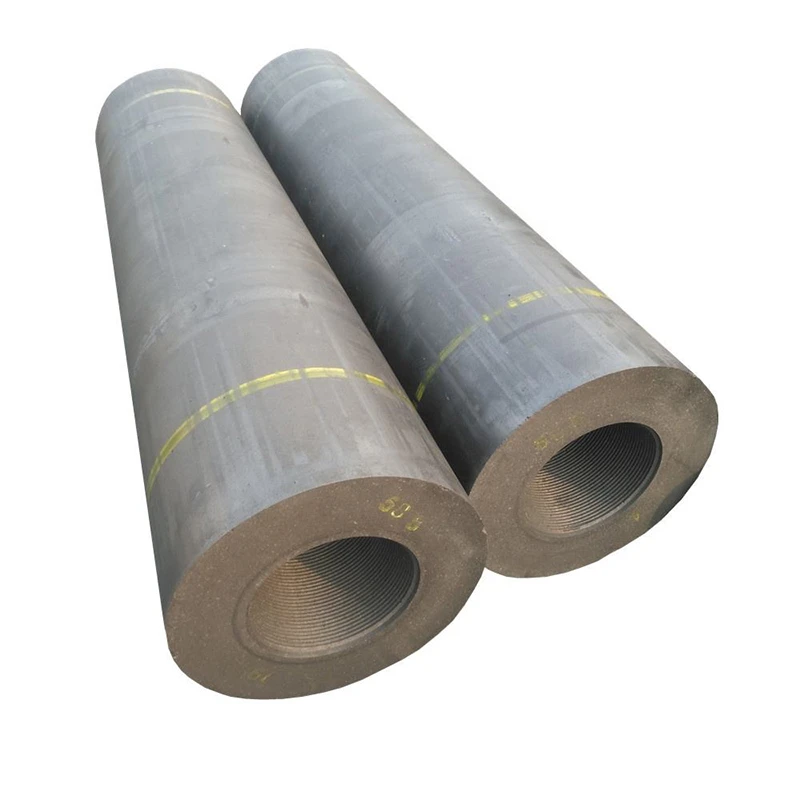
Using advanced technology, our factory ensures that every graphite electrode meets strict physical specifications. We monitor the production cycle 24/7. When you buy from a professional manufacturer, you are ensuring that the technology behind the rod is capable of sustaining the violent environment of an electric arc. Reliability is not an accident; it is the result of controlled production parameters.
Why are 4TPI Nipples Critical for Reducing Breakage in UHP Applications?
The connection point between two electrodes is known as the nipple. It is, without a doubt, the most critical component of the entire column. In UHP applications, where vibration and mechanical stress are intense, standard connections often fail. This is where 4tpi nipples (4 threads per inch) become essential. Unlike the coarser 3TPI design, 4tpi nipples offer a higher thread count, which translates to a larger surface area for contact and better friction locking.
When a graphite electrode column is lowered into the scrap, it experiences massive side forces and vibrations. A loose joint is a death sentence for the column. It increases electrical resistance at the joint, causing overheating, which leads to oxidation and eventual breakage. The 4tpi design provides a tighter, more secure fit that resists loosening during the "bore-in" phase of the melt.
We often see 3tpi 4tpi debates in the industry, but for large diameter UHP electrodes (such as uhp400 or larger), the 4tpi specification is the gold standard. It ensures that the current passes smoothly through the joint without creating "hot spots." Investing in high-quality 4tpi nipples is the single most effective way to reduce your consumption rate and prevent catastrophic column drops.
What Are the Specific Advantages of Impregnated Graphite Electrodes in an EAF?
An impregnated graphite electrode is not just a standard stick; it is a fortified component designed for longevity. In an electric arc furnace (EAF), oxygen is the enemy. As the furnace heats up, oxygen attacks the surface of the graphite, causing it to burn away. If the electrode is porous, this oxidation penetrates deep into the core, weakening the structure and causing the tip to pencil rapidly.
Impregnation involves forcing pitch into the pores of the baked electrode under high pressure before re-baking. This process significantly increases the bulk density and reduces porosity. The result is an impregnated graphite electrode that consumes much slower than a non-impregnated one. For the buyer, this means fewer electrode additions per heat and a lower overall price per ton of steel produced.
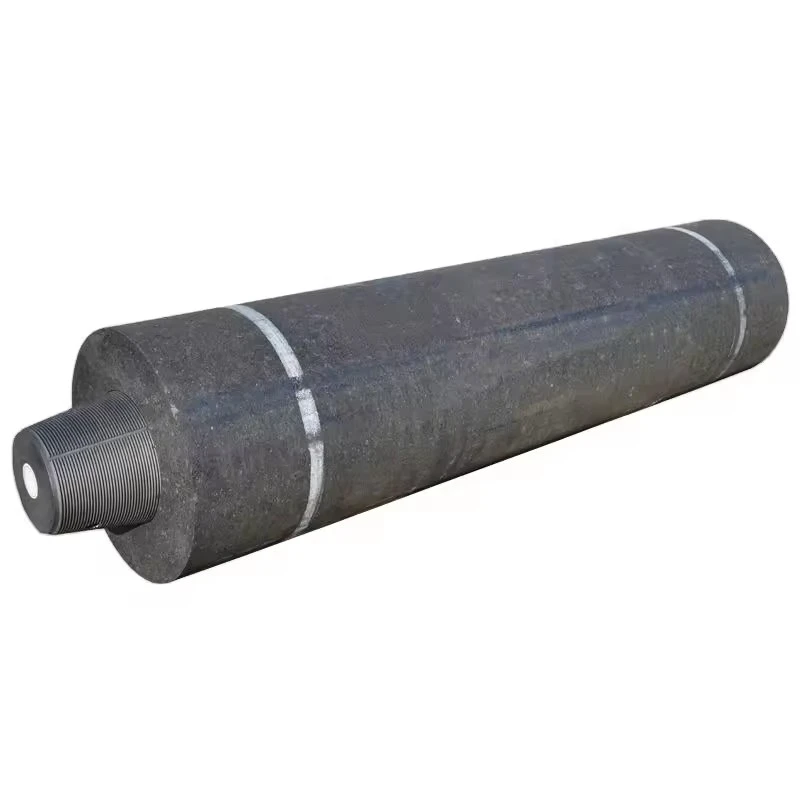
Furthermore, high density correlates with high mechanical strength. During the tilting of the furnace or when heavy scrap collapses against the column, an impregnated graphite electrode has the structural integrity to survive the impact. In the metallurgy sector, where energy efficiency and material consumption are scrutinized, using impregnated products is a best practice for reducing low operational costs.
How Do You Choose Between UHP HP RP Carbon Graphite Electrodes for Your Furnace?
Navigating the alphabet soup of uhp hp rp carbon graphite grades can be confusing, but selecting the right one is crucial for your electric arc furnace performance and budget. The choice depends largely on your transformer capacity and furnace size.
- UHP (Ultra High Power): These are the elite athletes of the graphite electrode world. Designed for high-capacity EAFs with transformer ratings above 500 kVA/ton. They use 100% needle coke and offer the lowest resistivity. If you are running a modern, high-output mill, uhp graphite electrode grades are non-negotiable.
- HP (High Power): These contain a blend of needle coke and high-quality petroleum coke. They are suitable for medium-sized furnaces or ladle furnaces (LF) where the current density is moderate. HP graphite offers a balance between performance and cost.
- RP (Regular Power): Made primarily from petroleum coke and coal tar pitch. RP graphite is used in smaller furnaces, foundries, or for smelting silicon and phosphorus. They have higher electrical resistance and are not suitable for high-current applications.
When sourcing hp rp carbon graphite electrodes, it is vital to match the specification to your equipment. Using an RP electrode in a UHP environment will lead to immediate failure due to thermal shock. Conversely, using UHP in a low-power application might be overkill and unnecessary expense. We supply the full range of uhp hp rp carbon graphite products to meet diverse industrial needs.
Carbon Graphite Electrodes for Electric Arc vs. Graphite Rods for Electrolysis: What’s the Difference?
While they may look similar, carbon graphite electrodes for electric arc furnaces and carbon graphite rods for electrolysis serve very different purposes. The graphite electrodes for electric arc furnaces are massive columns, often weighing over a ton, designed to conduct thousands of amperes of current to melt steel scrap through an arc discharge. They must withstand temperatures up to 3000°C and immense mechanical stress.
On the other hand, graphite rods for electrolysis manufacturer specifications focus on chemical stability and conductivity in liquid solutions. These rod products are often used in chemical processes, electroplating, or as anodes in cathodic protection systems. They do not face the same thermal shock or mechanical impact as EAF electrodes but must be highly resistant to chemical corrosion.
Knowing the difference ensures you don’t order a graphite rod when you need a heavy-duty graphite electrode. Whether you need carbon graphite rods for electrolysis or heavy graphite electrodes for electric arc steelmaking, checking the specification sheet for density, ash content, and resistivity is mandatory.
Where Can You Find Details and Price About Graphite Electrode Grades from China?
China is the world’s largest producer of carbon products, and finding a reliable supplier here is key to securing a good price. However, the market can be volatile. To find details and price that are accurate, you need to look beyond the trading companies and connect with a professional manufacturer.
When you inquire about the price about graphite electrode products, always ask for the current "offer validity." The price of needle coke and coal tar pitch fluctuates globally, influencing the final cost. A transparent company info policy means we update our clients on these raw material trends.
To get the best details and price about graphite, be specific in your inquiry. Don’t just ask for "electrodes." Ask for "UHP450mm x 2400mm with 4TPI nipples." This level of detail allows the factory to give you a precise quote rather than a generic estimate. We pride ourselves on offering good price structures that reflect the true value of our high-quality China-made goods, ensuring you remain competitive in your local market.
Why is 3TPI 4TPI Graphite Electrode UHP Machining Precision Vital for Connectivity?
The debate between 3tpi 4tpi graphite electrode uhp connections often comes down to the machining precision. A graphite electrode is only as good as its joint. If the machining of the nipple or the socket is even slightly off, the contact area is reduced. This leads to high electrical resistance, which generates heat—the enemy of the joint.
For 4tpi graphite electrode uhp hp applications, precision is paramount. The threads must be machined to a tolerance that allows for a tight fit without inducing stress cracks. Our technology utilizes CNC machining centers specifically calibrated for graphite. This ensures that every graphite electrode uhp hp rp we produce has identical thread profiles.
Whether you are using electrode uhp hp rp carbon grades, the connectivity determines the breakage rate. A 3TPI joint is coarser and faster to assemble, but for large diameters, the 4TPI offers superior mechanical locking. We rigorously inspect the "go/no-go" gauges on every batch to ensure that our china 3tpi 4tpi graphite electrode products fit perfectly on your furnace floor, every single time.
How Does a Professional Manufacturer in Hebei Ensure Low Resistivity and High Thermal Shock Resistance?
Hebei province is to carbon what Silicon Valley is to tech. Being a professional manufacturer in this region gives us access to the best raw materials and a skilled workforce. To ensure low resistivity in our uhp450 and uhp400 electrodes, we strictly control the graphitization temperature curve. The longer the material spends at peak temperature, the better the crystal alignment, and the lower the resistance. Low resistivity means less electrical energy is wasted as heat within the column, and more goes into melting the steel.
Thermal shock resistance is achieved by optimizing the grain size distribution in the paste. By mixing different sizes of coke particles, we create a structure that stops micro-cracks from propagating into large fractures. This is crucial for electrodes in electric furnaces that undergo rapid heating and cooling cycles.
Our plant operates a comprehensive laboratory where we test for CTE (Coefficient of Thermal Expansion). A lower CTE means the electrode won’t expand excessively when hitting the liquid steel, preserving the integrity of the nipple joint. We provide this technical data in our basic info sheets, so you know exactly how the product will perform under heat.
What Should You Look for in a Supplier of Electrodes for Electric Arc Furnace and Graphite Mold Products?
Finding a reliable supplier for electrodes for electric arc furnace operations is about more than just the lowest bid. It is about consistency. You need a partner who can deliver the same quality graphite electrode in December as they did in January. Look for company info that demonstrates a long-term commitment to the industry, such as ISO certifications and a track record of export to major steel markets.
In addition to electrodes, a versatile manufacturer can often supply related items like graphite mold products, graphite block materials, and shp graphite (Special High Power) items. This allows you to consolidate your purchasing.
Packaging is another indicator of a quality supplier. Graphite is brittle. We use heavy-duty wooden pallet systems with steel straps and waterproof wrapping to ensure that your graphite electrode arrives in pristine condition, ready for the foundry or smelt shop. Do not underestimate the value of efficient logistics; a damaged electrode is 100% waste. We are a co that stands behind our product, offering high-quality solutions for the global market.
Summary of Key Points
- Understand Your Grade: Choose strictly between UHP, HP, and RP based on your furnace’s power and transformer capacity to avoid breakage.
- Nipple Quality is Key: For large UHP electrodes, 4tpi nipples provide superior locking force and vibration resistance compared to 3TPI.
- Density Matters: Impregnated graphite electrode products offer higher bulk density, reducing oxidation and lowering consumption rates (kg/ton).
- Precision Machining: CNC-machined threads ensure a perfect interference fit, minimizing electrical resistance and preventing joint overheating.
- Source Reliability: Partner with a professional manufacturer in Hebei, China, like Handan Tuoda Carbon Co., Ltd., to ensure consistent quality and good price.
- Logistics: Ensure your supplier uses robust packaging (pallet, steel straps) to prevent transit damage to the brittle graphite material.
- Total Value: Don’t just look for the cheapest price; evaluate the total cost of ownership including consumption rate and breakage risks.
Post time: 02-05-2026