
Welcome to the fascinating world of carbon transformation. My name is Allen, and from my factory floor in China, I oversee seven production lines that churn out some of the most critical components used in modern industry. Whether you are running a massive steel mill in the Midwest or a precision foundry in Europe, the materials you use define your success. For my friend Mark Thompson—and buyers like him who value quality but need to keep an eye on the bottom line—understanding the science behind the product is the ultimate edge in negotiation and procurement.
Today, we are diving deep into graphitization. It sounds like a complex buzzword, but it is actually the heartbeat of the carbon and graphite industry. It is the bridge between raw petroleum coke and the high-performance graphite electrode or recarburizer that powers your furnace. Why is this article worth reading? Because understanding this process prevents you from buying inferior materials. It explains why some electrodes snap under pressure while others conduct electricity flawlessly. It clarifies why certain carbon additives dissolve instantly in molten iron while others float uselessly on top. We will explore how carbonization sets the stage and how industry news is shaping the future of these essential materials.
What Exactly is the Graphitization Process and How Does It Transform Carbon?
At its core, graphitization is a high-temperature metamorphosis. It is the industrial equivalent of alchemy, where we take disordered carbon materials and transform them into a highly ordered, crystalline structure. Imagine a messy room where clothes are thrown everywhere; that is amorphous carbon. Now imagine that same room where every shirt is folded perfectly and stacked in neat piles; that is graphite.
The graphitization process involves heating carbon materials to extremely high temperatures, typically between 2500°C and 3000°C (4532°F – 5432°F), in a specialized graphitization furnace. At these intense temperatures, the carbon atoms begin to vibrate and move. They shed their chaotic, amorphous arrangement and rearrange themselves into an ordered, hexagonal lattice structure. This is the crystal structure of graphite. This transformation is not instantaneous; it requires precise control of time and temperature to ensure the material reaches its full potential. Without this step, the material remains just baked carbon—hard, brittle, and a poor conductor of electricity compared to its graphitized counterpart.
From Raw Material to Masterpiece: How Does Petroleum Coke Become Graphite?
The journey usually begins with petroleum coke, a byproduct of the oil refining industry. This raw material is rich in carbon but full of volatile components and lacks the structure needed for high-end applications. The first step in the manufacturing chain is usually carbonization (or calcination). We heat the coke to around 1300°C to drive off volatile gases and moisture. This creates calcined petroleum coke.
However, to create a true graphite product, we must go further. We mix this calcined coke with a binder, usually coal tar pitch or high carbon coal tar asphalt, form it into the desired shape (like an electrode or block), and bake it. Then comes the grand finale: graphitization. The baked product is loaded into the graphitization furnace. As the heat rises, the material undergoes a fundamental change. The petroleum coke particles merge and align. The binder effectively disappears into the carbon matrix, and the entire mass becomes a unified graphitized body. This is how we produce the ultra high power graphite electrode specific calcined needle coke block materials that are essential for high-stress environments.
Why is the Ordered Structure of Graphite So Critical for Industrial Applications?
Why do we go through all this trouble and energy expense? It comes down to the structure of graphite. In a graphite crystal, the carbon atoms are arranged in layers. Within each layer, the atoms are bonded tightly in a honeycomb pattern, which is incredibly strong. However, the bonds between the layers are weak.
This unique architecture gives graphite its superpowers.
- Conductivity: Electrons can zoom through the layers with little resistance, making graphite an excellent conductor of electricity.
- Lubrication: Because the layers can slide over each other, graphite has low friction and is self-lubricating.
- Thermal Stability: The strong bonds within the layers allow graphite to withstand thermal shock that would shatter other materials.
For an industrial buyer like Mark, this means the graphite electrode he buys won’t crack when his arc furnace hits 3000°C, and the high purity 99.9% graphite powder he uses as a lubricant will actually protect his machinery. The ordered arrangement of atoms is the secret sauce.
How Does Graphitization Improve the Chemical and Physical Property of the Material?
The graphitization process dramatically enhances almost every property of the carbon material. Chemically, the process drives out virtually all impurities. Elements like sulfur, hydrogen, and nitrogen, which are detrimental to steel and iron production, are vaporized at 3000°C. This results in a material with extremely high carbon purity (often >99%) and very low ash and sulfur content.
Physically, the material becomes softer and easier to machine, yet more resistant to thermal stress. Its electrical resistivity drops significantly—often by a factor of 4 or 5 compared to baked carbon. This is crucial for efficiency. A graphitized electrode wastes less power and directs more energy into melting the metal. Furthermore, the material gains superior oxidation resistance and chemical inertness. It becomes a noble material, resistant to corrosion and capable of surviving in harsh chemical environments where metals would dissolve.
The Role of Graphitized Material in the Steel and Cast Iron Industry
In the heavy industries of steel and cast iron, graphite is not just a fuel; it is a precision tool. Specifically, graphitized petroleum coke (GPC) is widely used as a recarburizer (or carbon raiser). When making high-quality steel or ductile iron, precise control over the carbon content is mandatory.
A fully graphitized recarburizer dissolves rapidly in molten iron because its crystal structure is similar to the carbon solution in the iron. This ensures a high absorption rate (often >90%) and reduces the time the metal needs to sit in the furnace. In ductile iron production, the use of graphitized material is even more critical. It acts as an inoculant, helping to nucleate the graphite nodules that give ductile iron its flexibility. Using a non-graphitized carbon raiser (like anthracite coal) here would result in poor mechanical properties and casting defects.
How Do High-Quality Graphite Electrodes Depend on the Graphitization Process?
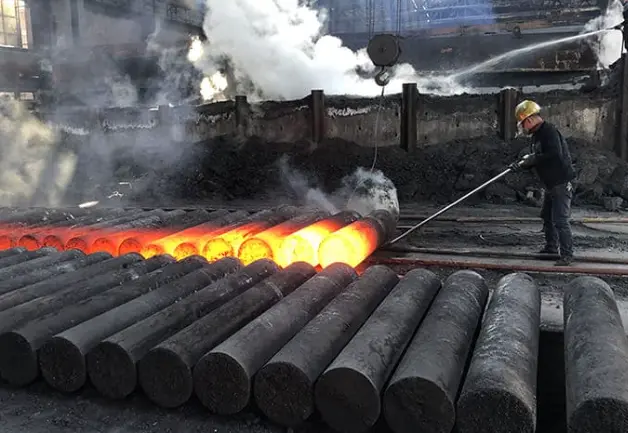
For my clients running electric arc furnaces (EAF), the electrode is the single most critical consumable. Whether it is a regular power graphite electorode or a massive UHP component, its performance is dictated by graphitization.
If the graphitization process is cut short or the temperature is not high enough, the electrode will have high electrical resistance. This causes the electrode to glow red-hot along its entire length, leading to rapid oxidation (burning) and "pencil-pointing" at the tip. It may also suffer from internal stresses that lead to catastrophic breakage when it is dipped into the scrap steel. A properly graphitized electrode has a low coefficient of thermal expansion (CTE), meaning it doesn’t expand much when heated. This stability is vital to prevent the electrode from cracking under the immense thermal shock of the steelmaking process.
Can Graphitization Help Reduce Oxygen Levels and Impurities in Steel Production?
Yes, indirectly but significantly. Because graphitization removes impurities from the carbon additive itself, you are introducing fewer contaminants into your melt. Non-graphitized carbon sources often contain high levels of nitrogen and hydrogen. High nitrogen can cause porosity and brittleness in cast iron and steel.
Furthermore, high-purity graphite is an effective reducing agent. When added to the melt, the carbon reacts with dissolved oxygen to form carbon monoxide/dioxide gas, which bubbles out. This helps to reduce oxygen levels in the molten metal, acting as a deoxidizer. This creates a cleaner, sounder casting with fewer gas defects. By using a highly graphitized material, foundries can improve the metallurgical quality of their cast products and reduce scrap rates.
What Distinguishes Amorphous Carbon from Crystalline Graphite in a Furnace?
To the naked eye, a piece of calcined anthracite coal and a piece of graphite might both look like black rocks. But put them in a furnace, and the difference is night and day. Amorphous carbon (like coal or standard calcined coke) has a disordered microstructure. It is harder, more abrasive, and has high electrical resistance. It dissolves slowly in molten iron because the iron atoms have to work harder to detach the carbon atoms from the disordered mass.
Crystalline graphite, on the other hand, is soft and greasy to the touch. In the furnace, it is highly conductive. When used as a recarburizer, the ordered layers of carbon atoms peel off easily into the molten metal. For Mark, my US client, this distinction is money. Amorphous material might be cheaper per ton, but if it takes twice as long to dissolve and ruins his furnace lining with slag, it is a false economy. Graphitized material represents efficiency and quality.
How to Assess the Quality of a Graphitized Recarburizer or Electrode?
How can a buyer like Mark tell if he is getting the real deal? Here are a few practical tips I share with my customers:
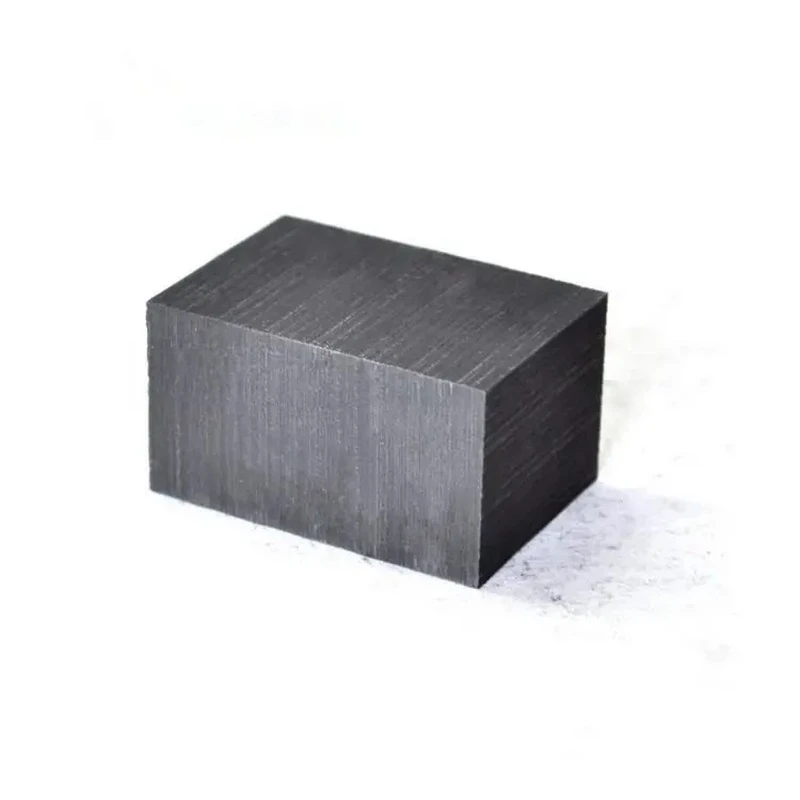
- The Paper Test: Take a piece of the recarburizer or graphite and rub it on a white sheet of paper. Real graphite leaves a clear, dark gray mark, just like a pencil (which is graphite!). Amorphous carbon will scratch the paper or leave a faint, gritty streak.
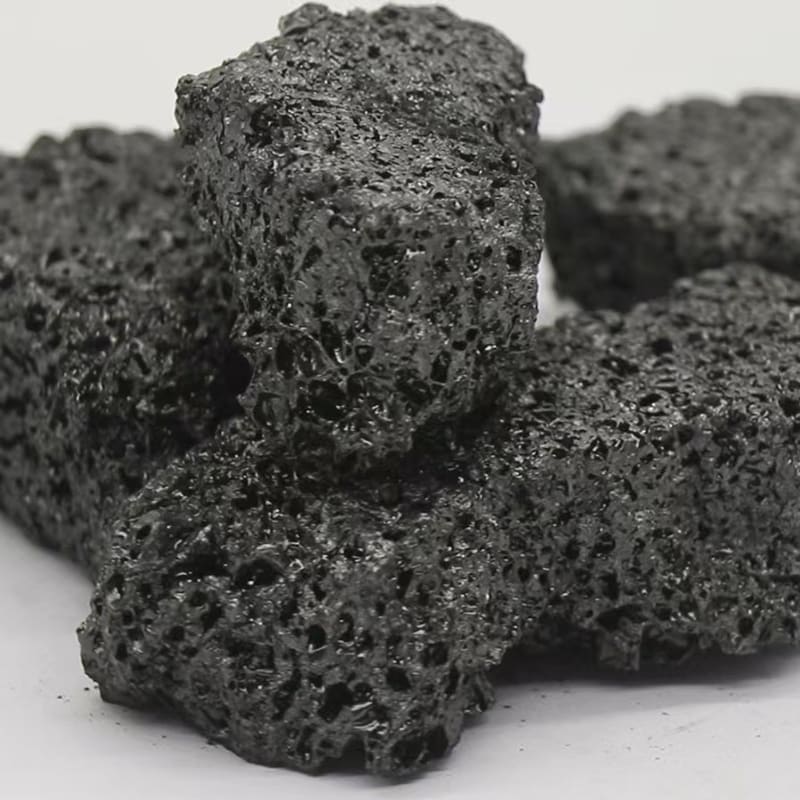
- Visual Inspection: Graphitized material usually has a metallic luster and can appear shiny. Non-graphitized material looks dull, matte black, and porous.
- Chemical Analysis: Look at the specs. A true graphitized agent will have Sulfur < 0.05% and Nitrogen < 300ppm. If the sulfur is 0.5% or higher, it hasn’t been fully graphitized.
- Density and Sound: For electrodes, a high-quality high strength graphite block or electrode will ring with a clear metallic sound when struck. A dull thud indicates cracks or poor graphitization.
Industry News: What are the Current Trends in Graphite Production and Manufacturing?
The industry is currently undergoing a massive shift. The demand for graphite production is skyrocketing, driven not just by steel, but by the electric vehicle (EV) revolution. Natural graphite and synthetic graphite are both key components in Lithium-ion battery anodes. This is creating a squeeze on the supply of high-quality petroleum coke and needle coke.
Industry news reports indicate that environmental regulations are also tightening. The graphitization process is energy-intensive and can produce emissions if not managed with modern filtration systems. Factories like ours in China are upgrading to cleaner, more efficient furnace technologies to meet these environmental standards while maintaining capacity. We are also seeing a trend towards customized high carbon calcined smokeless coal and other specialized carbon products to bridge the gap between cost and performance. For buyers, this means that securing a relationship with a reliable factory—one that controls its own production process and supply chain—is more critical than ever.
Key Takeaways
- Transformation: Graphitization is the process of heating carbon to ~3000°C to rearrange carbon atoms into an ordered, crystalline lattice.
- Performance: This process creates materials with superior electrical conductivity, thermal stability, and chemical purity.
- Identification: Real graphite leaves a mark on paper and has a metallic luster; amorphous carbon does not.
- Application: It is essential for manufacturing electrodes, recarburizers, and anode materials for batteries.
- Efficiency: Using graphitized materials reduces oxygen levels, dissolves faster in melts, and improves the overall efficiency of industrial operations.
- Supply: Partnering with a factory that masters the graphitization process ensures you get consistent quality in a volatile market.
Post time: 12-09-2025